The Essential Back to School Triangle Ruler: A Tool for Precision and Creativity
When the back-to-school season arrives, parents and students alike begin assembling the familiar toolkit of notebooks, pencils, erasers, and geometry sets. Among these essentials, one item often stands out for its simple yet profound utility: the triangle ruler. Whether you call it a set square, a triangular scale, or a right-angle ruler, this unassuming tool has been a cornerstone of classrooms, drafting tables, and creative studios for generations. But what exactly makes the triangle ruler so indispensable? And in an age of digital design and interactive learning, why are educators, crafters, and designers still seeking out high-quality digital versions of this classic tool?
This article explores the triangle ruler from the ground up—its purpose, its place in modern education and creative work, and how a carefully designed digital file bundle can make your back-to-school preparations smoother, more versatile, and more enjoyable. By the end, you'll understand not only why this tool matters but also how you can put it to work in ways you might never have imagined.
What Is a Triangle Ruler and Why Is It So Widely Used?
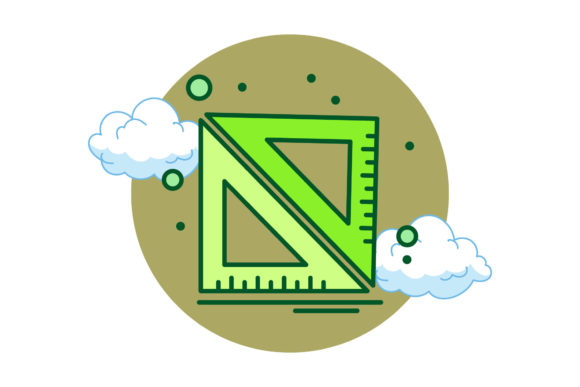
At its most basic, a triangle ruler is a flat, triangular measuring tool typically made of transparent plastic, wood, or metal. Unlike a standard straight ruler, the triangle ruler combines straight edges with fixed angles—most commonly 30°, 60°, 45°, and 90°. This simple addition of predetermined angles transforms the ruler from a mere measuring device into a precision instrument for drawing perpendicular lines, parallel lines, and geometric shapes with speed and accuracy.
The Geometry of the Triangle Ruler
Triangle rulers come in several standard forms. The 30-60-90 triangle and the 45-45-90 triangle are the most common, each named after its interior angles. These specific angle sets allow students and professionals to construct a wide range of geometric figures, from simple right triangles to complex architectural drawings. When used in conjunction with a T-square or a parallel rule, the triangle ruler becomes an essential tool for technical drafting, engineering sketches, and mathematical problem-solving.
The design is deceptively simple: the straight edges give you a reliable guide for drawing lines, while the angled edges let you create precise angular relationships without needing a protractor for every measurement. This dual functionality saves time, reduces errors, and helps build an intuitive understanding of geometry.
Common Uses in the Classroom and Beyond
In educational settings, the triangle ruler is a staple of middle school and high school geometry classes. Students use it to construct bisectors, draw perpendiculars, and explore the properties of triangles and polygons. It is equally common in technical drawing courses, where accuracy is paramount. But the tool's usefulness extends far beyond the classroom. Architects, interior designers, engineers, and graphic artists rely on triangle rulers for drafting floor plans, creating perspective drawings, and even laying out digital interfaces when sketching by hand.
For many creative professionals, the triangle ruler is both a nostalgic connection to traditional drafting and a practical tool for brainstorming ideas on paper before moving to the screen. It is a bridge between tactile creation and digital precision.
Why a Digital Version of the Triangle Ruler Matters
Today, the back-to-school shopping list has expanded beyond physical objects. As more learning happens online and more projects begin in digital form, having a high-quality digital file of a triangle ruler can be incredibly valuable. Whether you are a teacher preparing worksheets, a parent helping with virtual homework, a crafter designing cut files for a vinyl cutter, or a graphic designer creating printable templates, a digital triangle ruler gives you flexibility that a physical ruler cannot match.
Imagine needing a perfectly scaled ruler for a project that must print at a specific size, or wanting to overlay a ruler onto a digital image for a tutorial. With a digital file, you can resize, rotate, recolor, and integrate the ruler into any workflow. The right digital bundle transforms a simple tool into a versatile resource that adapts to countless contexts.
What You Get with a Complete Digital File Bundle
A carefully prepared digital product bundle for a back-to-school triangle ruler typically includes multiple file formats to ensure compatibility with different software and devices. For example, a comprehensive bundle might contain the following six files, each designed on a 1920 x 1280 pixel canvas for clarity and ease of use:
- AI File (Adobe Illustrator): A fully editable vector file that allows you to tweak every line, curve, and color. Perfect for professional designers who need to incorporate the ruler into larger compositions or brand materials.
- EPS File (Encapsulated PostScript): A versatile vector format that opens in many graphics applications, including older versions of design software. It preserves crisp edges at any scale.
- SVG File (Scalable Vector Graphics): The go-to format for web use, digital crafting machines like Cricut or Silhouette, and interactive lessons. SVGs can be scaled infinitely without losing quality.
- DXF File (Drawing Exchange Format): A format widely used in CAD software and by laser cutters, CNC machines, and other precision fabrication tools. It is ideal for turning a digital ruler into a physical object made of wood, acrylic, or metal.
- JPG File (JPEG Image): A high-resolution raster image suitable for quick printing, inserting into documents, or sharing online. It offers broad compatibility with all devices.
- PNG File (Portable Network Graphics): A raster image with transparency support, perfect for overlaying a ruler onto photos, presentations, or other digital projects without a distracting white background.
Having all six formats in one download means you never have to worry about compatibility. Whether you are using a professional design suite, a free online editor, a classroom computer, or a cutting machine, you have exactly what you need.
How to Use the Files in Real-World Projects
The practical applications of a digital triangle ruler bundle are broad and inspiring. Consider these examples:
- Teachers and Homeschoolers: Print the JPG or PNG version for students who need a physical ruler but forgot theirs. Or insert the SVG into a digital worksheet so students can measure angles and lengths directly on their screen using annotation tools.
- Crafters and Makers: Use the DXF file to laser-cut a durable acrylic triangle ruler in your workshop. Or import the SVG into your vinyl cutter software to create custom stencils, decals, or even educational puzzles.
- Graphic Designers: Open the AI or EPS file in Illustrator or CorelDRAW, adjust the colors to match a project's palette, and incorporate the ruler as a design element in posters, infographics, or packaging.
- Content Creators: Overlay the PNG file (with its transparent background) onto a video thumbnail or social media image to highlight a measurement or emphasize the theme of learning and precision.
Common Misunderstandings About Triangle Rulers
Many people assume that triangle rulers are only for advanced geometry or professional drafting. In reality, they are an excellent tool for introducing fundamental spatial reasoning to young learners. Another misconception is that a digital ruler file is unnecessary because a physical ruler is cheap and easy to find. While that's true, digital files offer something that physical tools cannot: instant replication, effortless scaling, and seamless integration into digital workflows. A single digital download can be printed dozens of times, used in dozens of projects, and shared across devices without degradation.
It is also worth clarifying that not all triangle rulers are the same. Some have hollow centers for easier handling, some include printed scales along the edges, and others are designed specifically for isometric drawing. When selecting a digital bundle, look for clean, accurate vectors that mirror real-world standards so that your measurements and angles are reliable.
Tips for Getting the Most Out of Your Digital Triangle Ruler
To make your digital triangle ruler truly useful, keep a few best practices in mind:
- Check the scale before printing. If you need a ruler that measures in inches or centimeters, verify that your software or printer settings are not scaling the image up or down. Lock the aspect ratio and set the physical size to match the intended dimensions.
- Layer it with other tools. Because SVG and AI files are vector-based, you can combine your triangle ruler with other shapes, grids, or protractors to build a custom geometry toolkit for your specific project.
- Use color coding. Many digital bundles allow you to change the color of the ruler. Use a bright hue for classroom materials so it stands out, or a subtle gray for professional blueprints.
- Back up your files. Store the AI, EPS, SVG, DXF, JPG, and PNG files in a dedicated folder. You will likely return to them again and again as new projects arise.
The Broader Picture: Precision Tools in a Digital Age
The triangle ruler, whether physical or digital, represents something larger: the enduring human need for precision, structure, and clarity. In a world where screens dominate, the act of drawing a straight line or constructing a perfect angle still carries deep educational and creative value. Digital files do not replace the tactile experience of using a physical ruler, but they extend its reach into new realms. They enable a teacher in a remote classroom, a parent helping with homework, or a maker in a home workshop to access the same reliable geometry that has guided builders and artists for centuries.
When you download a high-quality digital triangle ruler bundle, you are not just acquiring a set of files. You are investing in a resource that supports learning, creativity, and problem-solving across multiple contexts. The back-to-school season is the perfect time to add this versatile tool to your digital toolkit.
Conclusion: A Tool That Grows With You
From the first geometry lesson to the final touches on a complex design, the triangle ruler remains a faithful companion. Its simple shape holds the power to teach, to create, and to connect the analog and digital worlds. By choosing a comprehensive digital bundle with multiple formats, you ensure that this classic tool is always within reach—whether you are printing it for a classroom, cutting it into a prototype, or layering it into a digital masterpiece.
Thank you for taking the time to explore the potential of the back-to-school triangle ruler. With the right files in hand, you are ready to measure, draw, and create with confidence.