I’m Ready for First Grade Back to School – How a Single Design Unlocks Endless Creative and Commercial Possibilities
The transition into first grade marks a significant milestone in a child's life. It is a moment charged with anticipation, pride, and a touch of nervousness — both for the child and for the parents watching them take this step. Across classrooms, homes, and community events, the I’m Ready for First Grade Back to School design has emerged as a beloved visual expression of this milestone. But what makes a single graphic resonate so widely? The answer lies not only in its emotional appeal but also in its versatility across formats, mediums, and user needs. From a parent looking to create a personalized shirt for their child’s first day to a small business owner stocking a back-to-school collection, the design — available as a fully editable digital file — offers a practical, scalable solution.
This article unpacks the anatomy, applications, and real-world value of the I’m Ready for First Grade Back to School design, with a focus on understanding how a single digital asset can serve creators, educators, hobbyists, and entrepreneurs alike. Whether you are a seasoned print-on-demand seller or a parent new to DIY crafting, the insights below will help you maximize the potential of this design while appreciating the thought behind its construction.
Understanding the Design: More Than a Cute Saying
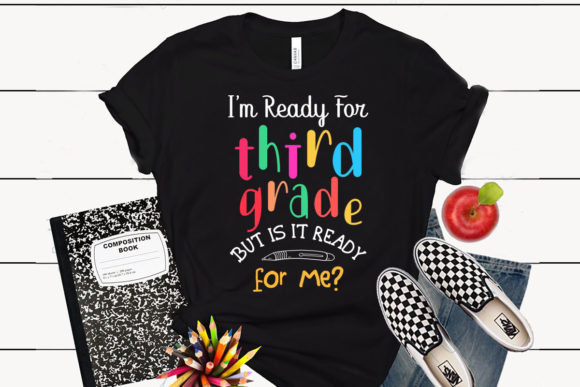
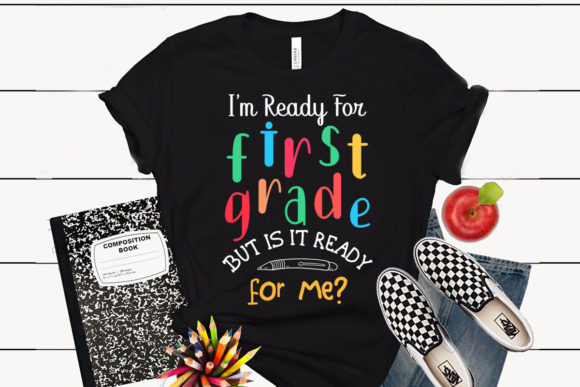
The phrase “I’m Ready For First Grade But Is It Ready For Me” strikes a playful, humorous chord. It acknowledges the child’s confidence while gently poking fun at the chaos that often accompanies the start of a school year. This balance of sincerity and wit is precisely what makes the design appealing across age groups and contexts. It is not just a shirt graphic — it is a conversation starter, a photo-op essential, and a memory marker.
Behind the phrase lies a carefully crafted vector design. The file package includes EPS, AI, SVG, and PNG formats, each sized at 12″ x 16″ with a resolution of 300 dpi. The PNG variant is delivered at 4500×5400 pixels, ensuring crisp reproduction even at larger scales. This level of detail is critical for anyone who intends to use the design for high-quality printing, cutting, or digital display. The 300 dpi standard ensures that fine lines, curves, and typographic details remain sharp whether the design is printed on a cotton t-shirt, a ceramic mug, or a tote bag.
For creators who work with cutting machines such as Silhouette and Cricut, the SVG and EPS files are particularly valuable. These vector formats preserve paths and layers, making it easy to isolate elements, resize without loss, or combine with other graphics. Meanwhile, the AI file offers full editability within Adobe Illustrator, and the EPS file provides broad compatibility across vector editing software. This multi-format approach is not accidental — it reflects a deep understanding of the diverse workflows that makers and designers rely on.
Who Benefits from This Design? A Look at Key User Groups
One of the most striking features of the I’m Ready for First Grade Back to School design is its cross-audience appeal. Below, we examine how different user types can integrate the design into their projects and businesses.
Parents and Family Members
For a parent, the first day of first grade is a photo-ready moment. Having a shirt with a clever, age-appropriate saying allows the child to feel special and part of the celebration. Parents who own a home cutting machine or have access to a local print shop can purchase the digital file once and create shirts for siblings, cousins, or even matching adult versions. Because the design is 100% editable, parents can customize the color, size, or arrangement to fit different garment styles — a short-sleeve tee for warm climates, a hoodie for cooler regions, or a bag for carrying school supplies. The ability to personalize the design without starting from scratch saves both time and money, and it ensures a unique result every time.
Small Business Owners and Print-on-Demand Sellers
Entrepreneurs who operate print-on-demand shops through platforms like Etsy, Shopify, or Amazon Merch will find this design ready to deploy. The high-resolution PNG file can be uploaded directly to mockup generators or printing services, while the AI and EPS files allow for batch customization — for example, changing the grade number or color scheme to create a series of designs for kindergarten, second grade, and beyond. The 12″ x 16″ canvas size fits standard apparel templates, reducing the need for additional resizing or cropping. For sellers who target the back-to-school season, having a design that resonates emotionally and visually can translate into higher click-through rates and conversions. The design’s wit also encourages social sharing, which acts as organic marketing.
Teachers and Educators
Teachers often look for ways to build classroom community and excitement during the first week of school. The design can be used to create matching shirts for a grade-level team, a welcome banner for the classroom door, or stickers for student name tags. Because the files are editable, an educator could modify the text to include the school name or mascot, fostering a sense of belonging. Additionally, the SVG format integrates smoothly with classroom cutting machines that many schools now have in maker spaces or art rooms. The design can also be used for non-apparel items such as pencil pouches, water bottles, or homework folders — all of which contribute to a cohesive and cheerful classroom environment.
Hobbyist Crafters and DIY Enthusiasts
Crafters who enjoy working with vinyl, sublimation, or heat transfer will appreciate the design’s clean lines and scalable vector structure. A hobbyist might use the design to create a matching set of gifts for a niece or nephew starting first grade: a shirt for the child, a mug for the parents, and a small bag for the teacher. The 300 dpi PNG file works well for sublimation printing on polyester blends, while the SVG file is ideal for cutting adhesive vinyl that can be applied to yet-to-be-created items. Because the design is not locked or watermarked, there is no barrier to experimentation — a crafter can flip, layer, or recolor elements to suit a specific project vision.
Technical Considerations for Production
Understanding the technical aspects of the design file ensures a smooth production experience, regardless of the chosen medium. Below are key factors to keep in mind when working with the I’m Ready for First Grade Back to School digital assets.
- Resolution and Scaling: At 300 dpi and 12″ x 16″, the design is optimized for most standard garment sizes. For larger applications — such as a banner or poster — the PNG file’s 4500×5400 pixel dimensions allow for scaling up without visible pixelation. For smaller items like stickers or decals, the vector files ensure that text and graphics remain crisp even when reduced.
- Color Consistency: Because the design is editable, users can adjust colors to match a specific brand palette or printing method. When using sublimation, it is advisable to work in CMYK mode if the software allows, to better predict final print colors. For vinyl cutting, the color of the material itself will define the final look, so the design’s outlines and separations become the primary focus.
- Software Compatibility: The included AI file is best suited for Adobe Illustrator users who need full control over layers, paths, and effects. The EPS file offers broader compatibility with other vector editors such as CorelDRAW, Affinity Designer, and Inkscape. The SVG file is the most universal option and can be imported into cutting machine software, web browsers, and many mobile design apps. The PNG file serves as a ready-to-use raster image for quick projects or for users without vector editing experience.
- Cutting and Weeding Considerations: For those using the design with a Cricut or Silhouette machine, the SVG format preserves the design’s structure, making it easier to set cut lines and weed small details. The design’s typography and graphic elements are spaced to minimize intricate weeding — a thoughtful touch that saves time and reduces material waste.
Real-World Use Cases and Workflows
To illustrate the design’s flexibility, consider three distinct workflows that demonstrate how the same file can yield vastly different end products.
Workflow 1: The Parent-Crafter
A parent wants to make a cotton t-shirt for their child. They download the PNG file, upload it to a home heat-press transfer paper product, and print using an inkjet printer. After cutting the transfer to size, they press it onto a blank t-shirt. Total time: about 20 minutes, not counting drying. The result is a professional-looking shirt at a fraction of the retail cost. Because the PNG is already at 300 dpi and the correct size, no adjustments are needed.
Workflow 2: The Print-on-Demand Seller
A seller on Etsy wants to list the design in multiple colors. They open the AI file, duplicate the artboard, and change the fill color of the text and graphic elements to create five color variants. They export each variant as a transparent PNG at 12″ x 16″ and upload them to their print-on-demand provider. Within an hour, they have a mini-collection ready for listing. The editable nature of the file allows them to refresh the collection for future seasons simply by changing the grade number or adding a year.
Workflow 3: The Classroom Teacher
A first-grade teacher wants to create a welcome banner for the classroom door. They open the SVG file in a cutting machine software, resize it to 24″ wide, and set the machine to cut adhesive vinyl in two colors. They weed the vinyl, apply transfer tape, and mount the design onto a pre-made fabric banner. The same file is also used to create small vinyl decals for each student’s cubby. Using one design file for multiple classroom elements creates visual consistency and saves preparation time.
Why Editable Files Matter in a Customization-Driven Market
The most significant advantage of the I’m Ready for First Grade Back to School design package is that every file is 100% editable. In a world where consumers increasingly seek personalized products, the ability to modify a design is not a luxury — it is a necessity. Editable files empower users to adapt a design to their specific medium, audience, or creative vision. They eliminate the frustration of searching for a “close enough” design and instead offer a foundation that can be tailored with minimal effort.
For business owners, editability means the difference between a one-off product and a scalable line. Changing a grade number, adjusting a font style, or swapping colors can produce an entirely new SKU without requiring a new design from scratch. For hobbyists, editability reduces the learning curve — they can start with a polished design and make incremental changes as their skills grow. For educators, editability allows alignment with school policies, mascots, or thematic units. This flexibility also extends to material choice: the same design that works for a t-shirt can be adapted for a mug, a bag, a decal, or a card simply by adjusting the dimensions or color space.
Moreover, owning the digital file means unlimited reuse. There are no per-print licensing fees, no expiration dates, and no restrictions on the number of items produced. This makes the design a cost-effective investment for anyone who plans to create multiple items — whether for a classroom, a family reunion, or a seasonal product line.
Observations on Design Quality and Market Trends
The back-to-school market is saturated with designs, but those that endure share a few common characteristics: relatable sentiments, clean typography, and versatile layout. The I’m Ready for First Grade Back to School design exemplifies these traits. The typography is bold enough to read at a distance, yet playful enough to appeal to young children and adults alike. The layout is balanced, with the phrase occupying the upper portion and the graphic element anchoring the composition. This structure works well on apparel because it avoids awkward cropping around necklines or seams.
Current trends in the print-on-demand and crafting space favor designs that can be used across multiple product types. Sellers are increasingly looking for “bundles” or “kits” that allow them to maintain visual consistency across a product line — for example, a shirt, a mug, and a tote bag that all feature the same design. The inclusion of multiple file formats in this package aligns directly with that trend. Additionally, the rise of sublimation printing has increased demand for high-resolution PNG files that can be printed on coated blanks, and this design’s 4500×5400 pixel PNG meets that requirement comfortably.
Another observation: the “but is it ready for me” twist adds a layer of humor that resonates on social media. Parents are more likely to share a photo of their child wearing a witty shirt, which in turn generates visibility for the design. For sellers, this word-of-mouth effect is invaluable. For parents and teachers, it creates a moment of connection with others who are navigating the same milestone.
Practical Tips for Getting the Most Out of the Design
Based on the workflows and technical details discussed above, here are several actionable recommendations for anyone using the I’m Ready for First Grade Back to School design files.
- Test on scrap material first. Before committing to a final product, run a test cut or test print on a similar material. This is especially important when using vinyl or sublimation, as color shifts or cutting depth issues can be corrected before the final run.
- Keep a master copy. Work on a duplicate of the original file. If an edit goes wrong, you can always revert to the untouched version. This is good practice for any editable design work.
- Leverage layers in the AI file. If you have access to Adobe Illustrator, explore the layer structure. You may find that text, graphic elements, and background are separated, making it easy to adapt the design for different uses — for example, removing the background for a sticker or adding a shadow for a dimensional look.
- Consider gender-neutral and size-inclusive options. Because the design is customizable, you can adjust colors or layout to appeal to a broader audience. Offering a version in different color palettes can increase the design’s reach.
- Bundle with complementary items. If you are a seller, consider pairing the shirt design with a matching sticker, water bottle label, or card. The cohesive look is appealing to buyers shopping for a complete back-to-school experience.
- Pay attention to copyright and commercial use. While the design file is labeled for personal and commercial use, always review the specific terms provided with your purchase. Understanding usage rights prevents issues down the line, especially if you plan to sell products featuring the design.
The I’m Ready for First Grade Back to School design represents more than a seasonal graphic — it is a tool that bridges emotional resonance with practical utility. Whether you are crafting a memory for a child, building a seasonal product line, or equipping a classroom, the editable, print-ready nature of the file ensures that you can achieve your goal with professionalism and ease. By understanding the technical specifications, recognizing the diverse user base, and applying thoughtful workflows, anyone can transform this single design into a meaningful, high-quality product. The back-to-school moment is fleeting, but the items created with this design can preserve that excitement for years to come.