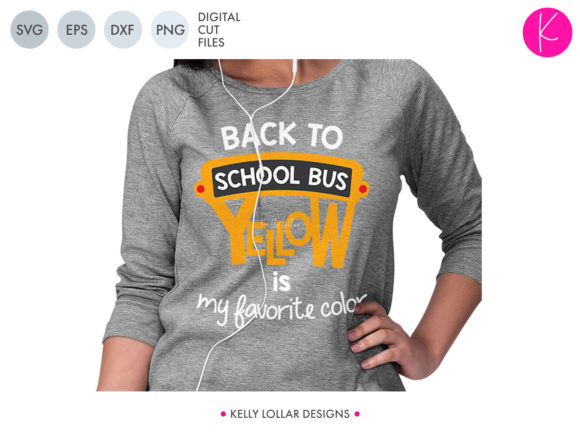
Back to School Bus Yellow: Evaluating the Parental Humor Design Asset
Every year, as the final weeks of summer wind down, a distinct energy emerges among parents. It is a complex blend of nostalgia for lazy mornings and a palpable, often unspoken, relief for the return of routine. This specific cultural moment has birthed its own micro-genre of humor, and few artifacts capture it as directly as the Back to School Bus Yellow design bundle. This digital asset, centered on the phrase “Back to School Bus Yellow Is My Favorite Color,” is more than just a punchline. It is a functional tool for creative expression, small-scale manufacturing, and seasonal storytelling. This article offers a professional evaluation of the bundle, dissecting its technical structure, target audience, practical strengths, and real-world limitations.
Deconstructing the Design and Its Core Appeal
At its heart, the Back to School Bus Yellow design operates on a shared cultural wavelength. The joke acknowledges a truth many parents live but rarely say aloud: the iconic yellow of the school bus is a welcome sight because it signals the beginning of the school year. The design does not rely on complex imagery or obscure references. Instead, it uses a straightforward declarative statement. This clarity is a significant strength. For a t-shirt or decal to function effectively in the wild, its message must be legible in a single glance. This asset meets that criterion easily.
The target demographic is clearly defined: parents, specifically mothers, who appreciate wearable sarcasm and value humor that validates their experience. The term “Mom” in the product description grounds the asset, but the sentiment is broadly relatable to any primary caregiver. It speaks to the quiet victory of making it through the summer and the anticipation of a structured week. This emotional resonance is what elevates the design from a simple text file to a piece of social signaling. Wearing this shirt is an act of solidarity.
Technical Evaluation of the File Bundle
For creators, small business owners, and serious hobbyists, the true value of a digital design lies not just in its concept, but in its technical execution. The Back to School Bus Yellow bundle includes four standard formats: SVG, DXF, EPS, and PNG. This coverage is comprehensive and ensures compatibility across virtually every major crafting system, from Cricut Design Space and Silhouette Studio to Adobe Illustrator and CorelDRAW.
Understanding the Vector Structure
The most critical technical feature of this asset is the mention of a “solid base” providing “wiggle room.” In practical terms, this means the text and any accompanying graphics are not floating in isolation. They are unified on a single background plate or shape. For those unfamiliar with vector editing, here is why this matters:
- Weld Integration: When you scale a design with disconnected components (like the letters in a word), they can shift relative to each other. A solid base prevents this. It acts as a permanent background that holds every element in place.
- Weeding Efficiency: Weeding—the process of removing excess vinyl from a cut sheet—is the most time-consuming part of a heat transfer vinyl (HTV) project. A design with a solid base has fewer isolated pieces to pick out. The user cuts the base, weeds the bulk, and then layers the yellow text on top. This significantly reduces production time, especially when making multiple shirts.
- Structural Integrity: A solid base ensures that thin strokes or intricate letters (like the lower-case “e” or “a” in “Favorite”) stay connected to the overall design. Without a base, small interior pieces can easily be lost during transfer.
This attention to the user’s workflow suggests the designer understands the friction points of apparel decoration. For a small business owner producing 20 shirts for a local back-to-school event, this structural choice translates directly into saved labor hours and less material waste.
Format Utility by Use Case
- SVG (Scalable Vector Graphics): The primary file for most modern electronic cutting machines. Its scalability ensures the design looks crisp on a onesie or an XXL hoodie.
- DXF: A legacy format still used by some older machines or specific laser engraving software. Its inclusion ensures backward compatibility.
- EPS: Best suited for professional graphic designers. It retains full editability, allowing users to change colors, alter the font, or add personal flourishes inside Illustrator or CorelDRAW before exporting a custom SVG.
- PNG: A high-resolution raster file with a transparent background. This is essential for direct-to-garment (DTG) printing, sublimation, or creating product mockups. It allows the creator to visualize the final product instantly.
The consistency across the formats is professional. A user can cut a shirt with the SVG, print a mug with the PNG, and edit the layout with the EPS, all maintaining the exact same layout and proportions.
Real-World Performance and Usability Analysis
When evaluating a design asset, performance must be measured by how easily it moves from the digital canvas to a physical product. The Back to School Bus Yellow bundle performs well in this regard due to its straightforward geometry. The text uses a bold, sans-serif style, which is ideal for HTV. Thick lines and generous spacing between letters ensure clean cuts on a standard 12x12 cutting mat.
The primary color reference—school bus yellow—is a specific shade (typically HEX #FFD800 or similar high-visibility yellow). On a white or black shirt, this color provides excellent contrast. However, users should be cautious when placing this design on a light yellow or khaki shirt, as the text may lose definition. For best results, a black base layer with a bright yellow top layer is recommended. This combination provides the highest legibility and durability.
Limitations and Contextual Considerations
No asset is universally perfect, and an honest evaluation requires discussing limitations. The most obvious constraint for the Back to School Bus Yellow design is its seasonal specificity. This is a peak-season asset. Its relevance and marketability are extremely high in July, August, and early September, but drop off sharply afterwards. For a small business owner, this is an inventory management consideration. It is a high-volume, short-window product. Over-ordering blank shirts for this specific design in October would likely lead to slow sales.
Another limitation is audience saturation. While the joke is appreciated by its target demographic, its appeal is narrow. It is a niche product for a specific emotional experience. It will not resonate with parents who are saddened by the end of summer, nor does it fit a general, non-parental audience. This is not a flaw in the design, but a definition of its function. It is a scalpel, not a sledgehammer.
Who Benefits Most from This Asset?
Understanding the ideal user profile is essential for anyone considering this purchase. Based on its structure and theme, the Back to School Bus Yellow bundle is best suited for three distinct groups:
1. The DIY Parent
For a mom looking to create a funny shirt for the first day of school drop-off or a “Mom’s Night Out,” this asset is a low-stakes, high-reward project. The file is ready to load into Design Space. With a roll of black and yellow HTV, a user can have a finished shirt in under 30 minutes. The humor is specific enough to feel personal, but broad enough to be understood by other parents at the bus stop.
2. The Small Business Owner (Micro-Brand)
For entrepreneurs selling on Etsy, Amazon Handmade, or at local pop-up markets, this design represents a low-risk entry into the seasonal apparel market. The file setup allows for rapid production runs. A seller can pre-order a batch of shirts, create a listing with a compelling mockup, and fulfill orders quickly. Because the phrase is trademark-safe (it relies on common language), it avoids the legal pitfalls of using officially licensed school bus imagery. The “solid base” structure means that even a novice production assistant can produce consistent, high-quality heat transfers.
3. The Serious Hobbyist
Enthusiasts who enjoy making gifts for friends and family will find this asset highly shareable. The multi-format bundle allows for experimentation. One could make a shirt using the SVG, a car decal using adhesive vinyl from the DXF, and a tote bag using sublimation with the PNG. The design’s flexibility across different mediums extends its value beyond just t-shirts.
Long-Term Value and Professional Verdict
To assess long-term value, one must separate the asset itself from the trend it represents. The digital files for Back to School Bus Yellow are a permanent purchase. They can be stored and reused year after year for personal projects. For a small business, the files become part of a seasonal rotation. They are not a year-round staple, but they are a reliable workhorse for a specific quarter.
The technical execution is solid. The files are clean, the layers are organized, and the inclusion of a solid base demonstrates a clear understanding of practical handicraft needs. The design avoids the common pitfalls of cheap SVGs—such as messy paths, missing interior cuts, or poor font selection. It is a professional-grade asset priced for the consumer market.
If there is a shared fault across similar assets, it is the reliance on a single joke. However, within its context, the joke is effective. It provides a moment of connection for the wearer and the viewer. From a pure utility standpoint, this bundle offers excellent value for money. It saves the user time, provides flexibility across cutting and printing platforms, and delivers a design that performs well in production.
For anyone looking to quickly capture the back-to-school sentiment in a wearable, durable, and humorous format, Back to School Bus Yellow is a highly functional and recommended resource. It respects the user’s time, delivers a clear message, and supports a wide range of creative workflows.