Alphabet Missing Letters Back to School Printables
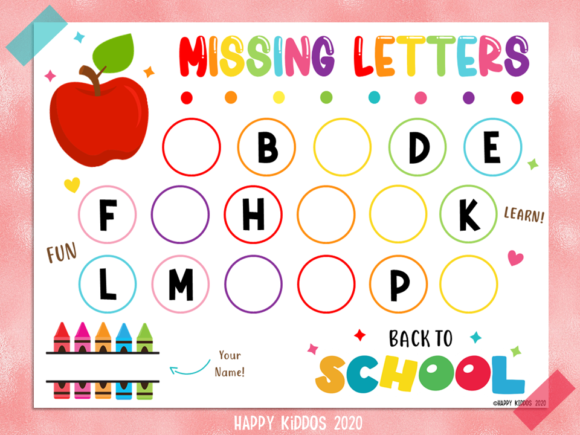
Back to school season brings a familiar mix of anticipation, fresh supplies, and the quiet hope that this year will feel more structured than the last. For educators, parents, and caregivers of early learners, that structure often begins with the alphabet. One resource that has proven remarkably effective in this space is the Alphabet Missing Letters Back to School printable set. At first glance, it looks simple: ten pages of letter sequences with intentional gaps for children to fill in. But that simplicity is exactly what makes it versatile, adaptable, and surprisingly deep in its educational potential.
This digital product includes a single zip file containing ten PDF pages designed for children in pre‑k, kindergarten, first grade, and similar early learning stages. Because it is a digital product, nothing is shipped; you download, print, and use it immediately. No waiting, no inventory, no waste. For teachers preparing a classroom or parents setting up a learning corner at home, that immediacy matters.
What Makes This Approach Worth Your Time
The concept behind Alphabet Missing Letters Back to School is straightforward: present a sequence of letters, remove some, and ask the child to identify and write the missing ones. This exercise does more than test memory. It strengthens letter recognition, reinforces alphabetical order, and develops fine motor skills through handwriting practice. But the real value lies in how the child engages with the task. Instead of passively reciting the alphabet, they are actively reconstructing it. That shift from passive to active learning is significant for young minds.
What also makes this printable set interesting is its format. Each page is clean, uncluttered, and intentionally designed to avoid visual overwhelm. For children who struggle with busy worksheets, this clarity can be the difference between frustration and focus. The black‑and‑white line art also means you can print it on any printer without worrying about color ink costs, and children can color in the illustrations after completing the letter work, extending the activity from a structured task into a creative one.
Creative Applications Beyond the Worksheet
It is easy to see this printable as just a worksheet, but that is only one of its many lives. Once you start thinking about how different users might adapt it, the possibilities expand considerably.
For Classroom Teachers
If you are teaching pre‑k or kindergarten, you likely have students at very different readiness levels. Some children enter school already knowing the alphabet; others are still learning to hold a pencil. The Alphabet Missing Letters Back to School set works well in this mixed environment because you can differentiate instruction simply by choosing which pages to assign. A child who needs more support might receive a page with only one missing letter per row, while a more advanced student works on a page with multiple gaps. You can also laminate the pages and use dry‑erase markers, turning a one‑time worksheet into a reusable center activity that lasts all month.
- Use as a morning warm‑up activity while you take attendance.
- Incorporate into literacy stations with letter tiles or magnetic letters for a hands‑on alternative.
- Send home as a low‑pressure homework option that parents can complete with their child.
For Homeschooling Parents and Caregivers
Homeschooling environments often thrive on flexibility, and this digital set offers exactly that. You are not locked into a prescribed schedule. You can print one page today, another next week, or use the entire set during a focused alphabet unit. Because the pages are self‑contained, you can also mix them into a larger theme. For a back to school unit, pair the missing letters activity with a picture book about starting school, a simple craft like decorating a pencil case, and a song about the alphabet. The printable becomes a natural anchor for a broader learning experience.
One practical recommendation: print the pages on heavier cardstock if you plan to use them more than once. Slip them into page protectors or dry‑erase sleeves, and you have a resource that can be used across multiple children or revisited later in the year for review.
For Early Intervention and Special Education
Children who receive special education services or early intervention often benefit from repeated, predictable formats. The consistent layout of this printable set reduces cognitive load, allowing the child to focus on the specific skill of letter sequencing rather than decoding a new worksheet design each time. You can also modify the activity by providing letter stamps, stickers, or laminated letter cards for children who are not yet ready to write. The goal remains the same, but the mode of response changes to match the child's current abilities.
Practical Tips for Keeping Results Clear and Effective
To get the most out of Alphabet Missing Letters Back to School, a little intentionality goes a long way. Here are several grounded recommendations based on real classroom and home use.
Start with the full alphabet visible. Before handing out the missing letters pages, make sure the child has a clear reference. An alphabet chart posted on the wall, a letter strip taped to the desk, or even a handwritten line on a whiteboard provides a safety net. Over time, you can remove the reference as the child builds confidence.
Model the thinking process. Show the child how you approach the task. Say aloud, "I see A, B, and then a blank. What comes after B? That's right, C. Now I write C in the blank." Hearing the logical steps out loud helps children internalize the strategy.
Use a consistent letter formation style. If your school or home uses a specific handwriting method, check that the font on the printable matches or complements it. This consistency prevents confusion when children are learning to form letters correctly.
Incorporate movement. For kinesthetic learners, pair the worksheet with a physical activity. Have the child hop or clap through the alphabet while pointing to the printed letters. Then return to the page to fill in the missing ones. Movement breaks during seatwork can significantly improve focus for young children.
Adapting for Different Goals and Contexts
Not every child needs the same thing from this resource, and that is fine. The adaptability of the Alphabet Missing Letters Back to School set means you can shape it to fit your specific objectives.
Building Letter Sound Connections
While the primary focus is alphabetical order, you can easily extend the activity into phonics. After the child fills in a missing letter, ask them to say the sound that letter makes and name a word that starts with that sound. This bridges the gap between letter recognition and phonemic awareness, a critical step in early reading development.
Developing Visual Discrimination
For children who confuse similar letters like b and d or p and q, the missing letters format provides repeated exposure in a non‑threatening context. You can create targeted practice by choosing the specific letters that give a particular child trouble. Since the printable set includes multiple pages, you are not limited to one sequence.
Supporting Bilingual or Multilingual Learners
Children who are learning English alongside another language benefit from clear, predictable visual models. The alphabet is one of the first bridges between spoken and written language. Using this printable with a bilingual learner allows you to point to each letter, say its name in English, and then connect it to the child's home language if the alphabet is shared or similar. For children whose home language uses a different script, the activity can focus on English letter recognition without assuming prior knowledge.
Balancing Structure with Creativity
One of the most underappreciated aspects of a well‑designed printable is how it leaves room for the person using it to add their own touch. The Alphabet Missing Letters Back to School set does not try to be everything at once. It provides a clean structure, and then you bring the creativity.
After a child completes a page, consider letting them turn the letters into a drawing. They might draw objects that start with each letter in the sequence, or create a simple comic strip using the letters as characters. This kind of open‑ended follow‑up keeps the learning alive without requiring another worksheet. It also respects the child's own ideas and imagination, which is something no pre‑designed activity can fully replace.
For older children or those who need an extra challenge, you can use the blank spaces in the sequence to introduce a simple cipher or code. Assign each missing letter a number based on its position in the alphabet, and have the child decode a message after completing the page. This turns a straightforward literacy task into a problem‑solving game that feels more like play than work.
Recommendations for Getting Started
If you are considering adding Alphabet Missing Letters Back to School to your toolkit, here is a practical path forward.
- Download the zip file and extract the PDF pages onto your device or cloud storage.
- Print a few pages on standard paper first to test the layout and font clarity.
- Decide whether you will use the pages as single‑use worksheets or laminate them for repeated use.
- Introduce the activity in a low‑pressure setting. Frame it as a puzzle rather than a test.
- Observe how the child responds. Do they rush? Do they hesitate at specific letters? Use that information to guide your next steps.
- Store the remaining pages for future use, either as review, as a filler activity, or as part of a structured alphabet unit later in the year.
The beauty of a digital product is that it does not expire. You can print one page today, another in six months, and another next year. As the child grows, the same resource can serve different purposes: first as an introduction, later as reinforcement, and eventually as a quick confidence‑building review.
Final Thoughts on This Resource
There is no shortage of educational printables available online. What makes Alphabet Missing Letters Back to School stand out is not a flashy design or a gimmick but rather the thoughtful simplicity of its core idea. It respects the child's developing brain by offering a clear, achievable challenge that builds confidence with every completed page. It respects the adult's time by being ready to use with minimal preparation. And it respects the reality of varied learning environments by being adaptable to classroom, home, or therapy settings.
Whether you are a teacher preparing for the first day of school, a parent looking for a meaningful activity during a busy morning, or a caregiver supporting a child's early literacy journey, this printable set offers a reliable starting point. It is not a magic solution, but it is a solid tool, and sometimes that is exactly what you need.